Consultancy service
Platforms, files and data
Messy operational data, file structures, SharePoint, OneDrive, Exchange and Outlook, SMB file shares, migration mapping and acquisition clean-up.
The problem
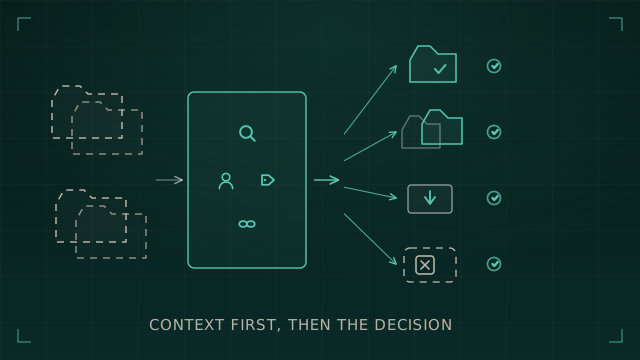
Much of the real work in enterprise environments is not glamorous. It is old folders, duplicated data, unclear ownership, inconsistent filing structures, legacy access, acquisition leftovers and content stored in the wrong place.
That mess decides whether migrations hold, whether Copilot is safe to enable, what storage really costs and how long every incident takes to resolve. Understanding it is the prerequisite for almost everything else.
Typical situations
- A file estate that has to move to SharePoint or a new tenant and cannot be trusted as it stands.
- Duplicate, stale and unowned content inflating storage, risk and migration scope.
- Acquisition or merger content that never got rationalised.
- Files held in mailboxes and personal areas that never reached a managed platform.
- Copilot readiness, where oversharing and stale content would surface in answers.
How the work runs
- 01
Inventory
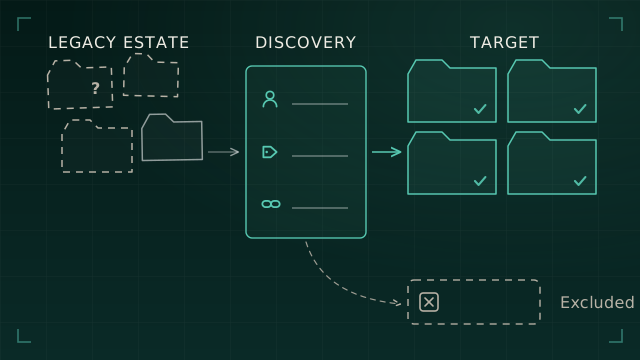
Content age, duplication, ownership, access and usage, gathered read-only before anything is promised.
- 02
Classify
Current, stale, duplicate, sensitive, unknown. Plain categories beat elaborate taxonomies.
- 03
Design the target
A structure shaped by how the organisation works today, not by the accidents of the old tree.
- 04
Map explicitly
Source to target, including what will not move and why, with every exclusion recorded.
- 05
Deliver with sign-off
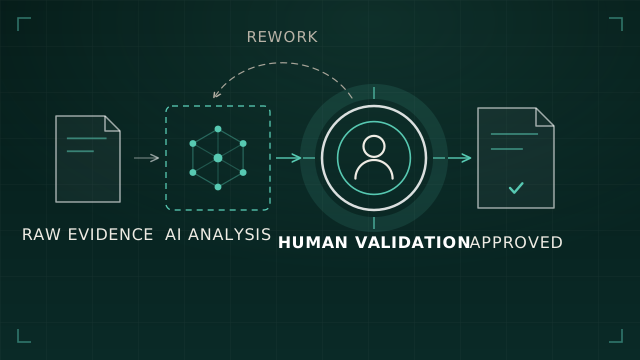
Controlled moves with the people who own the risk approving each stage.
Risks and decisions
Risks to control
- Deleting a copy that turns out to be the governed record.
- Migrating structure debt as it stands, so the new platform inherits the old problem.
- Breaking the paths that scripts, shortcuts and applications still resolve.
- Content whose owner left years ago retained by default rather than by decision.
- Sensitive material landing somewhere its retention duties do not follow.
Decisions to settle
- What is current, stale, duplicate, sensitive or unknown, in plain categories.
- Who owns each source area, confirmed rather than assumed.
- What to retain, consolidate, archive or exclude, chosen by the owners.
- What the target structure represents: how the organisation works today.
- What will not move, with the reason recorded against every exclusion.
What you get back
- 01Discovery report
- 02Duplicate analysis
- 03Migration mapping
- 04Folder structure review
- 05Risk register
- 06Evidence pack
- 07Remediation plan
- 08Governance recommendations
- 09Sign-off ready change plan
Reference material
Supporting evidence